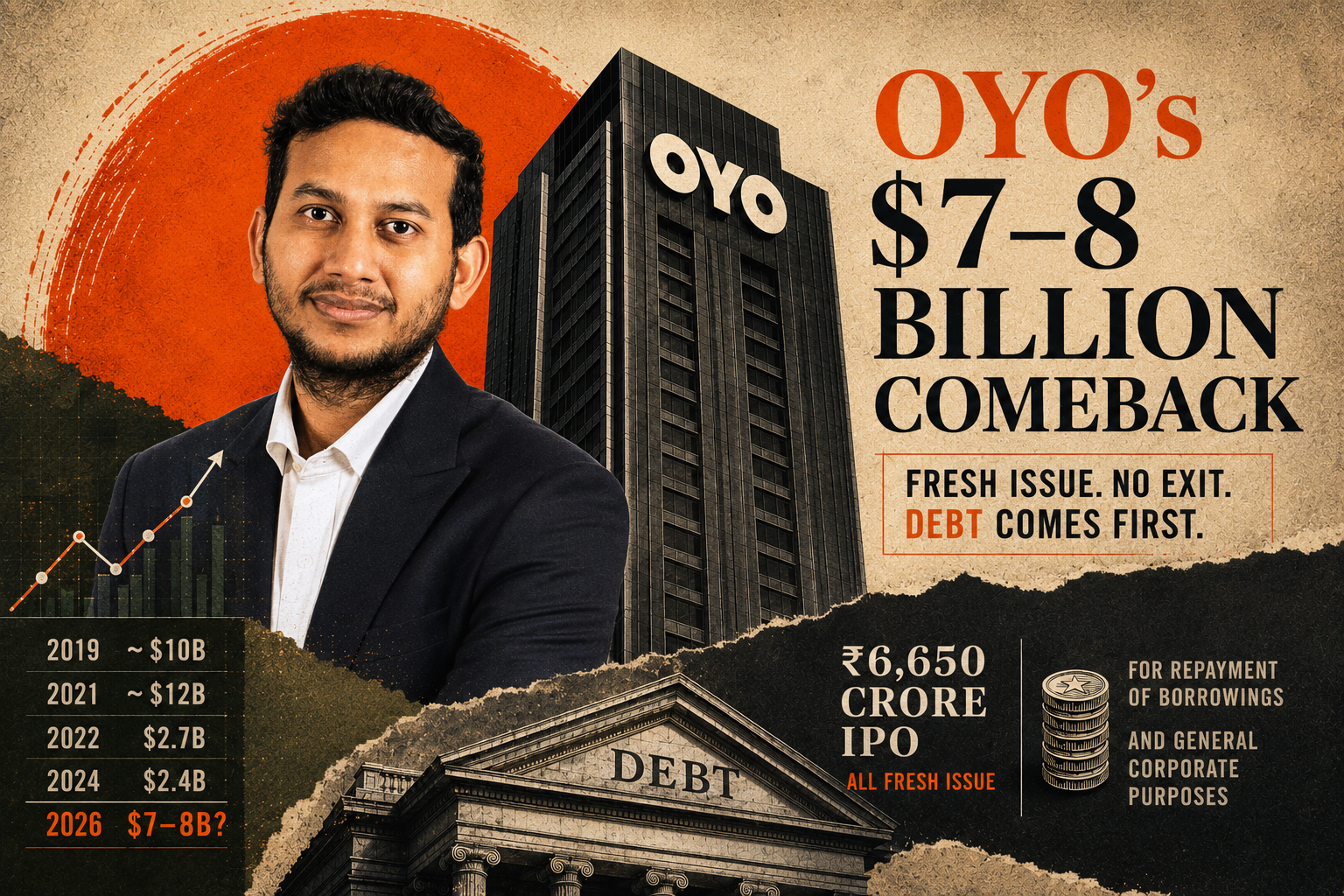
The headline number is ₹6,650 crore. The number that actually matters is the round trip: $10 billion, down to $2.4 billion, now back toward $8 billion. And this time, nobody is selling a share. OYO has tried to go public twice. Both times it walked away. Now it is back for a third time. On 30 June 2026, Prism, the holding company that sits above the OYO brand, filed its updated draft prospectus. SEBI had cleared it earlier in June. The ask, also reported by the Free Press Journal: ₹6,650 crore, at a hoped-for valuation of $7 to $8 billion. Most coverage stopped at the size. The size is the least interesting part. Three other things are. OYO's valuation has been on a wild ride. Few companies survive a fall like this. Fewer come back from it. Look at the last two rows. OYO wants the public to pay roughlythree timeswhat its own investors paid in a private round eighteen months earlier. For context,TechCrunch reportedthat in 2024 OYO was worth less than the money it had raised. About $3.3 billion of equity and debt had gone in. The company was valued at $2.4 billion. The IPO target does not just recover that. It laps it. The 2021 attempt priced OYO at $12 billion with no profits. It was a growth story sold into a hype cycle, and it died with the cycle. This time there is a real business under the number. The updated prospectus shows, for the first nine months of FY26: That is a profitable, growing company. The re-rating is not fantasy. But three times the price in eighteen months is still a big ask. Profit alone does not settle it. The public book will. The entire ₹6,650 crore is afresh issue. There isno offer for sale. This IPO has only the first kind. Per the prospectus, the big holders,SoftBank, Ritesh Agarwal, Microsoft and Airbnb, are not selling a single share. There is also a possible pre-IPO placement of up to ₹1,330 crore, which would shrink the fresh issue, not add a seller. The marketed reading is simple. Insiders holding rather than selling means confidence. Maybe. But read it against the round-trip table: That can mean they expect more upside. It can also mean that selling at this price would rattle the book, and that for early money it would still lock in a poor return. Either way, the people who know OYO best are keeping their chips on the table. A pure fresh issue is a fundraise, not a payday. For months the open question was what the ₹6,650 crore was actually for. The prospectus answers it. The net proceeds go to"repayment or prepayment of borrowings and general corporate purposes." That one line changes how you read the whole deal. This is not mainly a war chest for growth. It is, in large part, a clean-up. Fresh equity from the public, used to pay down debt and cut the interest bill. Put the pieces together and the structure stops looking like swagger and starts looking like need: One number is not in the draft: theprice band. Valuation and final pricing come at launch, not now. That gap, between the $2.4 billion of 2024 and whatev


