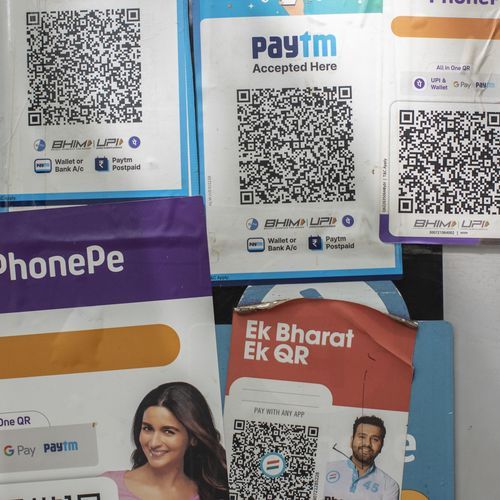
India’s fintech revolution has already solved one big problem: moving money at population scale. According to an April 2026 PIB release by the Union Ministry of Finance, UPI crossed ₹314 lakh crore in transaction value in FY 2025-26 and had onboarded more than 700 banks. That scale has changed the reality for the fintech industry. Once payments become instant and widely available, the pressure shifts to what surrounds the payment: verification, reconciliation, credit assessment, settlement, and record-keeping. This is where blockchain is finding a more serious role in Indian fintech. The opportunity is not to replace UPI or banking rails, but to make the financial workflows around them more reliable. For lenders, that could mean a clearer trail of borrower consent, collateral, and repayment. For businesses, it could mean invoice records that are easier to verify before financing. For banks and institutions, it could mean faster settlement and cleaner ownership records when financial assets change hands. In such a large digital payments market, trust is becoming the next frontier for the entire financial ecosystem. India’s account aggregator framework shows why this matters. According to the Department of Financial Services, as of March 31, 2026, more than 2.88 billion financial accounts were enabled for data sharing, 284.6 million accounts had been linked by users, and the account aggregator ecosystem had 179 live financial information providers and 989 live financial information users. This is becoming a national data layer. It allows financial information to move with user consent. But once that data enters a lending, insurance, investment or business-finance workflow, the next challenge is maintaining a record that all authorised parties can trust. Startups can build on this layer by solving what happens after consented data is accessed. A lender may receive bank data through an account aggregator. But the lending decision does not end with access to data. It needs records that can survive multiple hand-offs between the borrower, lender, platform, verifier, and regulator. The loan record, collateral position, invoice trail, or repayment history must be trusted by every authorised party. Blockchain can help create a shared record for such workflows. The value is not dramatic decentralisation. The value is a cleaner and verifiable, blockchain-based audit trail. The most credible blockchain story in Indian fintech is therefore likely to be regulated and practical. One area where this shift is already visible is tokenised money. The RBI’s Digital Rupee FAQ, updated on April 29, 2026, says the e-rupee is being pilot-tested in both retail and wholesale segments. This shows that tokenised finance is not only a private-sector idea. It is being tested inside the formal financial system. Some of this is already moving from theory to product. In January 2025, CRED became the first fintech platform to integrate access to India’s e-rupee project. For users