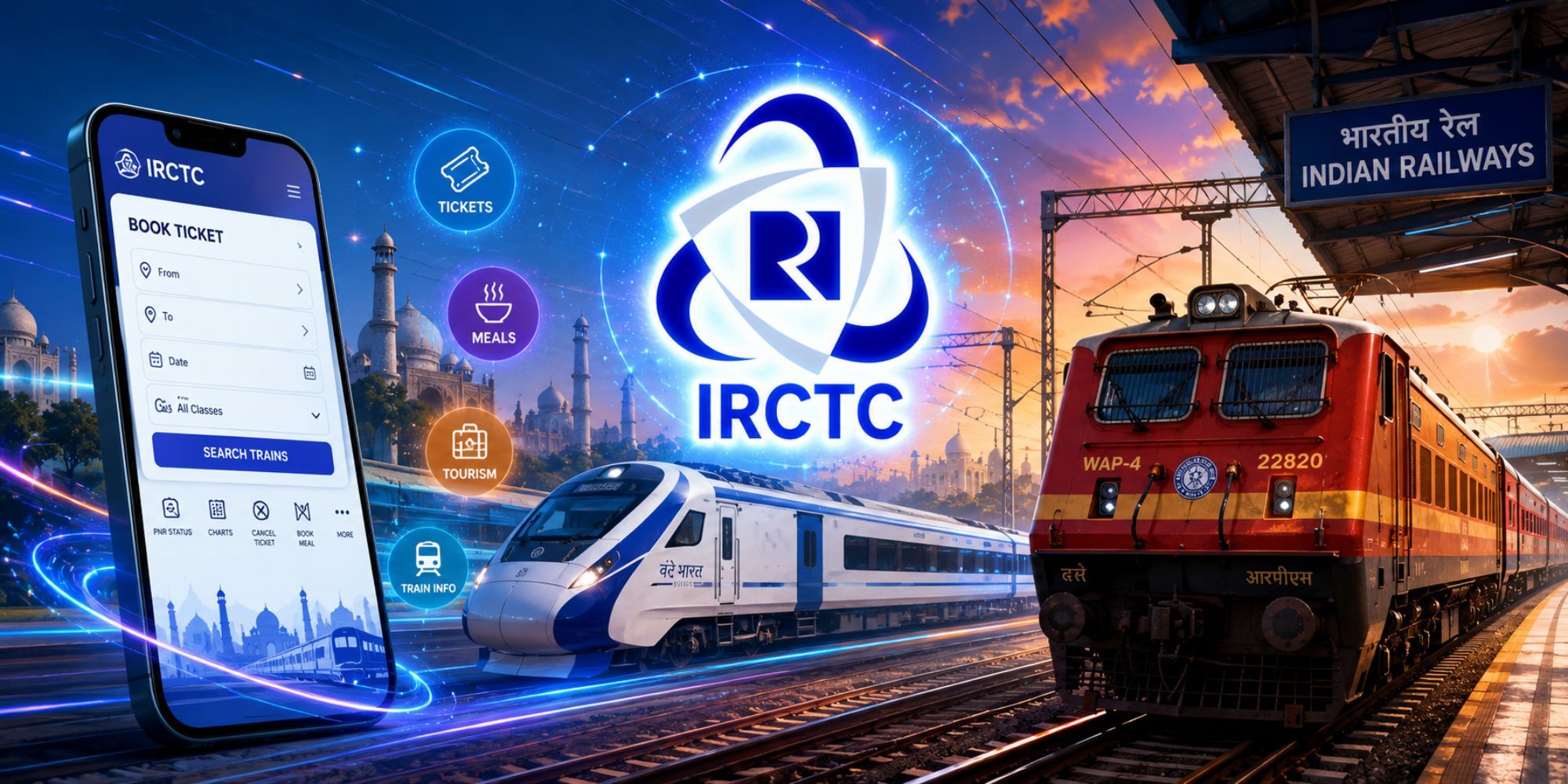
Ask an Indian traveller where they buy a reserved train ticket online and the answer is usually IRCTC. The company’s name is so closely tied to railway travel that it is easy to assume it runs the trains. It does not run most of them. Indian Railways operates the wider network, determines ordinary fares and carries the enormous cost of tracks, stations, coaches and locomotives. IRCTC operates only a limited number of corporate and tourist services. Its real commercial power lies somewhere much smaller: the booking screen. That screen has become one of the most valuable digital checkpoints in India. IRCTC says it now commands 89% of reserved railway tickets. In FY2024-25, its website and mobile app sold an average of 13.88 lakh tickets every day, processing more than 50 crore tickets during the year. Passengers may begin their bookings on other authorised travel platforms, but these transactions still depend on IRCTC’s reserved-ticketing ecosystem. The fee attached to each transaction appears almost insignificant. IRCTC charges ₹15 plus GST for a non-AC e-ticket and ₹30 plus GST for an AC e-ticket. The charge applies to the ticket, not separately to every passenger travelling on the same booking. Yet scale turns this small amount into a major source of income. In the final quarter of FY2025-26 alone, IRCTC booked 13.39 crore tickets and earned ₹247 crore from convenience fees. This is where IRCTC begins to look less like a travel operator and more like a digital tollbooth. Once the ticketing infrastructure is running, processing one more booking costs far less than cooking another meal or transporting another bottle of water across the country. In Q4 FY2025-26, internet ticketing produced ₹390 crore in revenue with an EBITDA margin of 76%. Few consumer-facing businesses can collect money at this scale without manufacturing a product, running thousands of shops or spending heavily to acquire every customer. The surprising part is that ticketing is not IRCTC’s largest business by revenue. Catering holds that position. In FY2025-26, catering generated ₹2,399 crore, compared with ₹1,536 crore from internet ticketing. Tourism contributed ₹890 crore, while Rail Neer added ₹391 crore. But those businesses come with physical costs. Catering requires food, employees, kitchens, contractors, logistics and protection against wastage. Rail Neer needs factories, bottles and nationwide distribution. Tourism involves trains, hotels, packages and customer support. Ticketing, by comparison, is primarily a platform business. That difference explains why it can generate far higher margins despite contributing less revenue than catering. These additional businesses also benefit from IRCTC meeting passengers at the most important commercial moment: when a journey is being planned and paid for. From there, it can sell meals, holiday packages, luxury train journeys, hotel rooms and bottled water. Indian Railways creates the journey, but IRCTC occupies the commercial laye
Related Stories
 From idea to enterprise: Designing startup programmes that deliver long-term imp
 Mirae Asset Venture Investments, others pay Rs 12.75 lakh to settle Sebi proceed
 CCPA Penalises Rapido INR 10 Lakh for Dark Patterns, Uber and Ola Under Scrutiny
 JanAI Technology launches with a plan to take AI to 100 million Bharat household