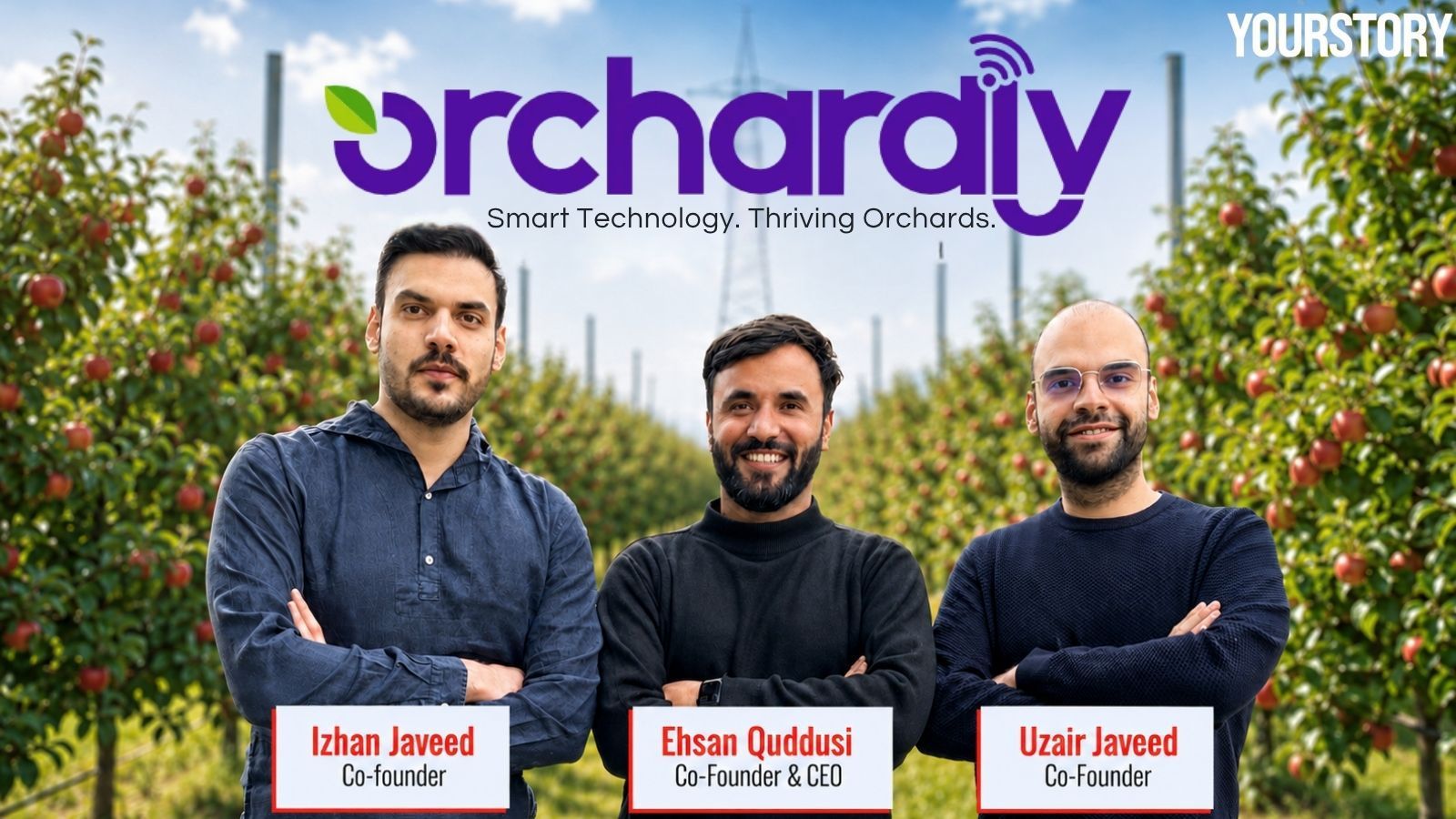
Ask most people why Kashmir's apple growers struggle and the answers come quickly: the climate is turning hostile and cheap imported fruit is undercutting them. Srinagar-based Ehsan Quddusi thinks both answers miss the point. To him they are symptoms. The disease, as he describes it, is something quieter and more fixable. “The real bottleneck is decision quality,” says Quddusi, who founded Orchardly in 2021 with two friends. A grower makes hundreds of choices every season: when to irrigate, what nutrition to apply, when and what to spray, when to prune, when to harvest, and many of those calls are still guided by tradition, a neighbour's orchard or a shopkeeper's suggestion rather than by science tuned to that particular patch of land. Small errors, repeated across millions of trees, compound into a vast loss of productivity, quality and income. Fix the decisions, the argument goes, and much else follows. That reframing is the company's whole thesis, and a more ambitious one than it first sounds. These are not marginal inefficiencies. Jammu and Kashmir accounts for roughly 70–75% of India’s commercial apple production, while the country produces about 2.5 million tonnes of apples annually. The sector supports millions of livelihoods across the region, yet India still imports hundreds of thousands of tonnes of apples each year, running up an annual bill of more than $400 million. In a market of this scale, even modest improvements in fruit quality, productivity and shelf life could unlock billions of rupees in additional value for growers. Orchardly is often described as an advisory app; its founders insist it is not, and that the distinction is the difference between a feature and a business. What they say they are building is closer to an operating system for temperate horticulture: the layer of intelligence, inputs, services and market access that Kashmir's orchards have never had, assembled into one connected stack. Grandiose for a bootstrapped company with a small team in Srinagar, perhaps, but on the evidence of how they have built so far, not entirely a stretch. Figures on reach and revenue are as stated by the company; independent verification is limited at this stage. Quddusi comes from technology, not farming. His two co-founders, Izhan and Uzair Javeed, come from farming families, and like most households in Kashmir all three grew up with a personal stake in horticulture. That split shaped the company. Technology, Quddusi says, taught them how to build systems; growers taught them what actually matters, and the two lessons did not always agree. Shradha Sharma with the Orchardly founders in a Kashmir orchard. From left: Shradha Sharma, Ehsan Quddusi, Uzair Javeed and Izhan Javeed. The founders are candid that walking orchards taught them more than any whiteboard could. Every orchard is different; two plots a few hundred metres apart can need entirely different decisions because of elevation, slope, microclimate, soil and canopy. So inste
Related Stories
 Lam Research to invest Rs 10,000 Cr in India, set up first silicon component man
 Kissht parent OnEMI board approves Rs 832 crore preferential issue
 Taruwar Agro: Three Bihar Friends Built a Rs 2.5 Crore Business from Banana Wast
 Adidas Confirms Job Cuts at India Tech Hub, Nearly Half of Employees Affected