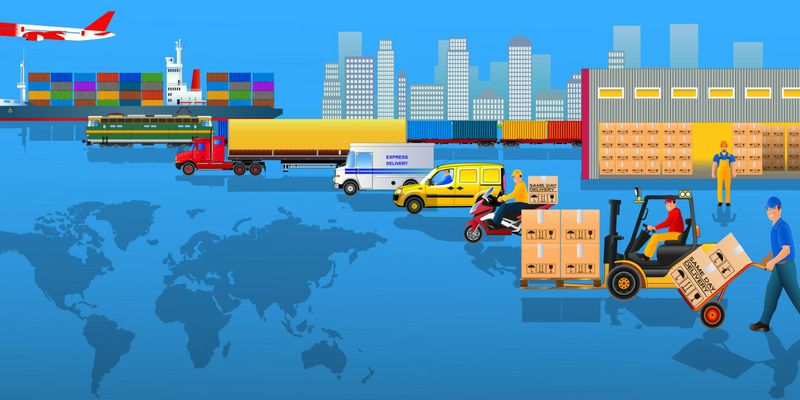
When people talk about AI in logistics, they usually mean the visible stuff: robots in the warehouse, route algorithms, and the occasional drone. That isn’t incorrect, but it points at the wrong layer. Automating the physical work mostly lowers cost, and cost isn’t what decides who wins anymore. The change that will redraw India’s logistics ecosystem is less photogenic; it’s in how decisions get made. What used to be a company’s moat—trucks, warehouses, and pin-code coverage, is being replaced by something much harder to copy: what its operations have learned to do. AI has clearly arrived in Indian logistics. The AI-in-logistics market is on track to grow from $756 million in FY24 to $6.8 billion by FY32, as per market intelligence firm Markets and Data’s India AI in Logistics Market Assessment. Meanwhile, NASSCOM scores Indian enterprises at 2.45 out of 4 on AI adoption. Most people read those numbers and stop at efficiency; the roughly 15% that AI shaves off logistics costs, and the forecasting it lifts by as much as 50% (Markets and Data). While all this is true, it’s also thin. Efficiency is just the year-one dividend. The advantage that widens over time only shows up if you build for it, and most companies don’t. For most of the last decade, logistics software sold visibility—dashboards showing where the shipment is and which lane is bleeding margin. Logistics service provider Delhivery, a listed company, built much of its scale on that plumbing. Visibility still matters; it just stopped being what separates the winners. The real question now is whether your system acts on the data by itself. Knowing a fulfilment centre will stock out in two days is useful; a system that has already moved the inventory before you’ve opened the alert is a different animal. That gap, reporting a problem versus resolving it, is the shift from reports to decisions, and everything else runs downstream of it. Take a solar company trying to go from 12 rooftop installations a day to 50. The obvious answer is more crew. The real bottleneck is usually judgement: one operations manager holding installer schedules, panel stock, and site-readiness in his head, most of it worked out over the phone. That runs on a hero, and heroes have a ceiling; it buckles around 20 a day, and it walks out the week the manager takes a better offer. Put in a system that sequences installations against live inventory and crew availability, and 50 becomes reachable without hiring at the same pace. What you’ve bought isn’t a good quarter; it’s a way of working that holds as the numbers climb. That’s the real meaning of ‘systems over heroes’, a duller, more valuable thing than the phrase suggests. It’s also where the advantage compounds, which gets underpriced. Every time the system runs, the ones that go wrong especially feed the next decision. A platform that has handled millions of them across many brands and cities isn’t just sitting on more data; it’s sitting on operating experience that
Related Stories
 Lam Research to invest Rs 10,000 Cr in India, set up first silicon component man
 Kissht parent OnEMI board approves Rs 832 crore preferential issue
 Taruwar Agro: Three Bihar Friends Built a Rs 2.5 Crore Business from Banana Wast
 Adidas Confirms Job Cuts at India Tech Hub, Nearly Half of Employees Affected