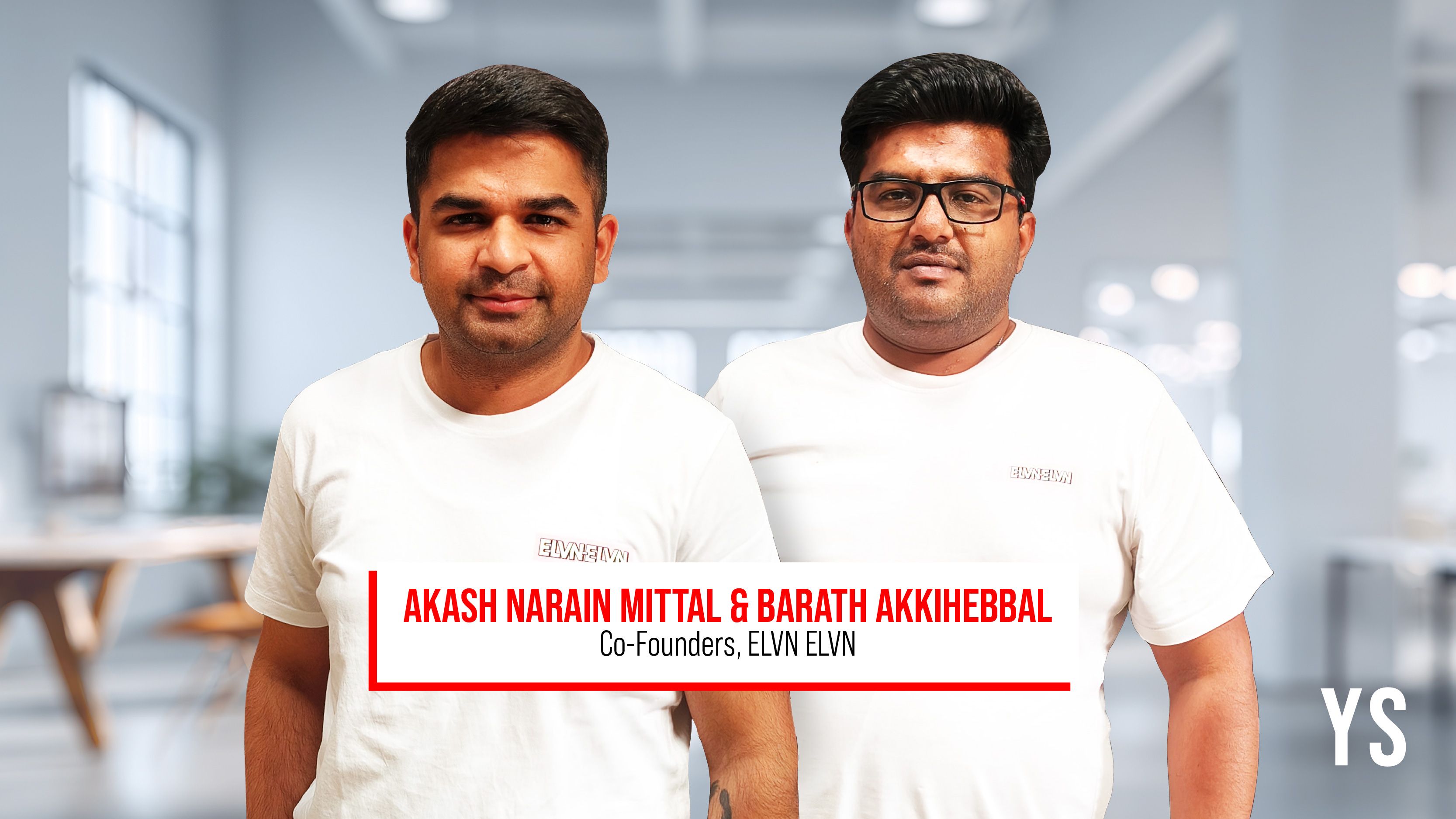
Ice cream was once milk, cream, sugar, and fruit. Now most tubs list polysorbates, carrageenan, CMC, mono and diglycerides, additives that extend shelf life and simplify manufacturing, but don't make the ice cream better. ELVN-ELVN, founded in Bengaluru in 2024 by Barath Akkihebbal and Akash Narain Mittal, is built on the premise that none of that was ever necessary. The brand follows one rule: if it has an E number, it does not go into the ice cream. E numbers are codes assigned to chemical additives in food, covering preservatives, stabilisers, emulsifiers, and synthetic colourings. Akkihebbal has gluten intolerance and lactose sensitivity, and struggled to find something he could eat without affecting his health. The co-founders bring decades of supply chain and distribution experience: Mittal through a distribution business serving Nestlé, ITC, and Parle; Akkihebbal through OfficeSmart, a corporate procurement business he founded in Bengaluru in 2013. Akkihebbal ran three ice cream parlour franchises, where his interest in the category began. That experience shaped how ELVN-ELVN was built. The result is two ranges built on the same standard: the first, MILLET, is a vegan ice cream built on a blend of Indian millets, jowar, ragi, foxtail, and pearl, with coconut milk as a secondary ingredient, sweetened with whole dates, allulose, and monk fruit. Most monk fruit products use erythritol as a carrier; ELVN-ELVN's does not, citing emerging research linking the sugar alcohol to cardiovascular risk. The MILLET range is dairy- and gluten-free, and comes in six flavours: Lush Litchi, Mango Tango, Coffee Scenes, Berry Me Up, Cosmic Coconut, and Blackout Fudge. The second, SELECT, is a dairy ice cream made with A2 Desi cow milk and fresh cream, offered in flavours like Strawberry, Pink Guava, Choco Velvet, and Royal Alphonso. The founders say A2 milk is easier to digest than A1-dominant commercial dairy. Both ranges sell in 125 ml cups at Rs 140 and 450 ml packs at Rs 400. Customers include those with lactose intolerance, gluten sensitivity, or diabetes, as well as anyone seeking cleaner ingredients. The ice cream's shelf life is capped at nine months. “A two-year ice cream tells you everything about what went into it,” Mittal says. At a Soul Santé market in Bengaluru, a customer bought 14 cups, packed them in ice, and carried them 400 km to Tamil Nadu for their teacher, who was diabetic and had not been able to eat sweets in years. “We had a seven-or eight-year-old run up to us at a stall and ask, ‘Uncle, does this have sugar in it?’" Akkihebbal recalls. It is a question the founders say they are hearing more and more from all kinds of buyers. Manufacturing is in-house at a South Bengaluru facility, where a proprietary millet-milk extraction process, developed with the National Institute of Food Technology Entrepreneurship and Management (NIFTEM-T), is kept closely guarded so the recipe isn't handed to an outside manufacturer. The plant's capacity exc
Related Stories
 Lam Research to invest Rs 10,000 Cr in India, set up first silicon component man
 Kissht parent OnEMI board approves Rs 832 crore preferential issue
 Taruwar Agro: Three Bihar Friends Built a Rs 2.5 Crore Business from Banana Wast
 Adidas Confirms Job Cuts at India Tech Hub, Nearly Half of Employees Affected