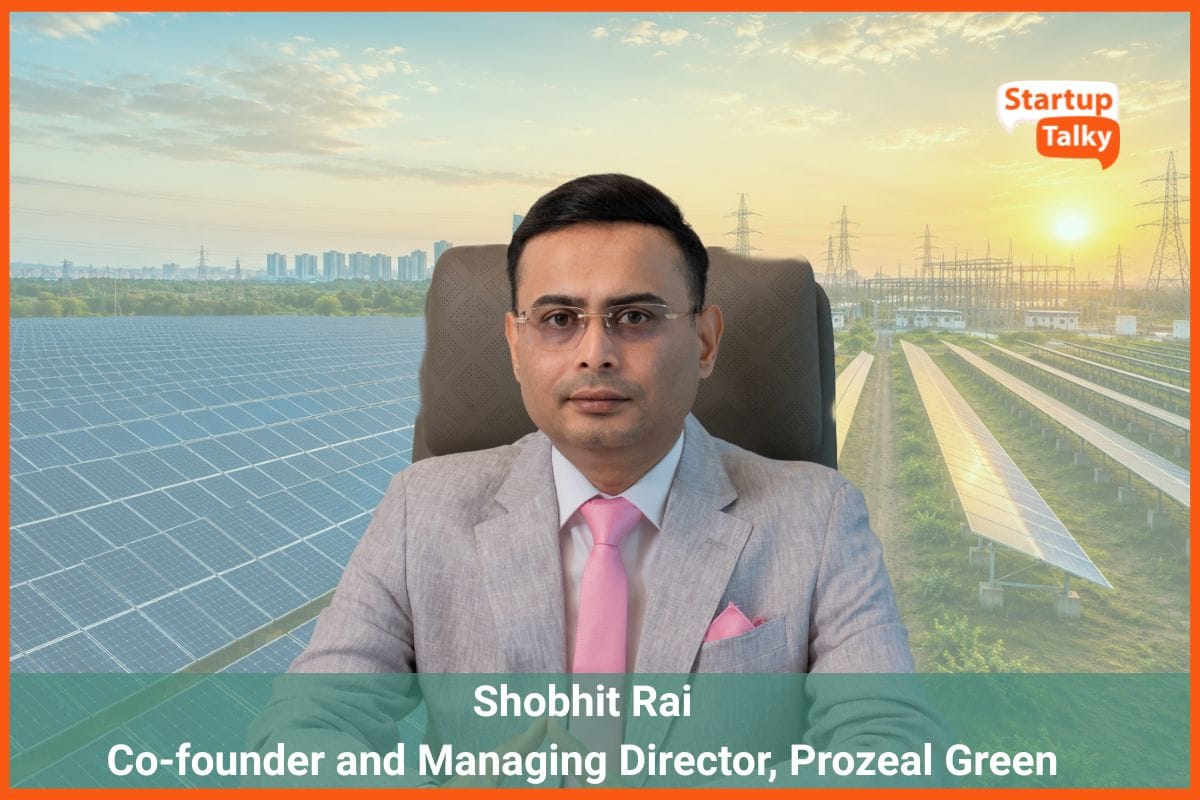
Shobit Rai of Prozeal Green discusses India's solar EPC industry, covering grid connectivity delays, rising project costs, workforce shortages, evolving EPC economics, and the reforms needed to support the country's renewable energy growth. India's solar EPC (Engineering, Procurement, and Construction) sector is witnessing rapid growth as the country advances toward its renewable energy goals. Installed solar capacity has increased from under10 GW in 2016 to more than 100 GW in 2025, reflecting strong industry momentum. With Indiatargeting 500 GWof non-fossil fuel capacity by 2030, the sector is expected to continue expanding significantly in the coming years. In this exclusive conversation with StartupTalky,Shobit Rai, Co-founder and Managing Directorof Prozeal Green, discusses the key challenges and opportunities shaping the industry, including grid connectivity delays, transmission bottlenecks, EPC margins, workforce development, and the future of solar project execution in India. Shobit Rai:Grid connectivity backlogs. Not land, land gets the headlines because it's political and visible. Grid delays are silent and devastating. Here's the reality: I've seen projects that were 100% mechanically complete sit idle for 8-10 months waiting for ISTS connectivity or a pooling substation. During that entire period, debt keeps accumulating. On an INR 350 crore project, a seven-month commissioning delay costs INR 9-13 crore in interest alone, before you count demobilization losses, standing O&M costs, and team displacement. The systemic fix is straightforward but politically uncomfortable:grid infrastructure must be tenderedand awarded 24 months ahead of the solar capacity it's meant to serve, with hard milestones and penalties for delays, the same penalties developers and EPCs face. Right now, all thegrid readiness risksits entirely on the private side. That's structurally wrong. One policy correction here unlocks probably 15-20 GW of stranded or delayed capacity almost immediately. Shobit Rai:The impact is indirect but very real, primarily through shipping costs and raw materials like copper and aluminium, which are at a life high.Fuel cost has increased, which has increased which has impacted the cost of basic goods and freight by 10-15%. A significant share of India's module imports and BoS components transit routes are disrupted by Red Sea instability. Freight costs spiked sharply through 2023-2024. On a 100 MW project, that translates to INR 1.5-2.5 crore in additional logistics cost compared to 2022 baselines, plus 3-6 weeks of port delays that throw construction sequencing off badly. On financing, geopolitical risk-off sentiment pushes up the cost of dollar-denominated borrowing and ECB exposure. We've seen effective project IRRs compress by 80-120 basis points purely from financing cost movement, with no change in underlying project fundamentals. Our response has been twofold. We've moved from just-in-time procurement to carrying 60-90 days of c
Related Stories
 Lam Research to invest Rs 10,000 Cr in India, set up first silicon component man
 Kissht parent OnEMI board approves Rs 832 crore preferential issue
 Taruwar Agro: Three Bihar Friends Built a Rs 2.5 Crore Business from Banana Wast
 Adidas Confirms Job Cuts at India Tech Hub, Nearly Half of Employees Affected