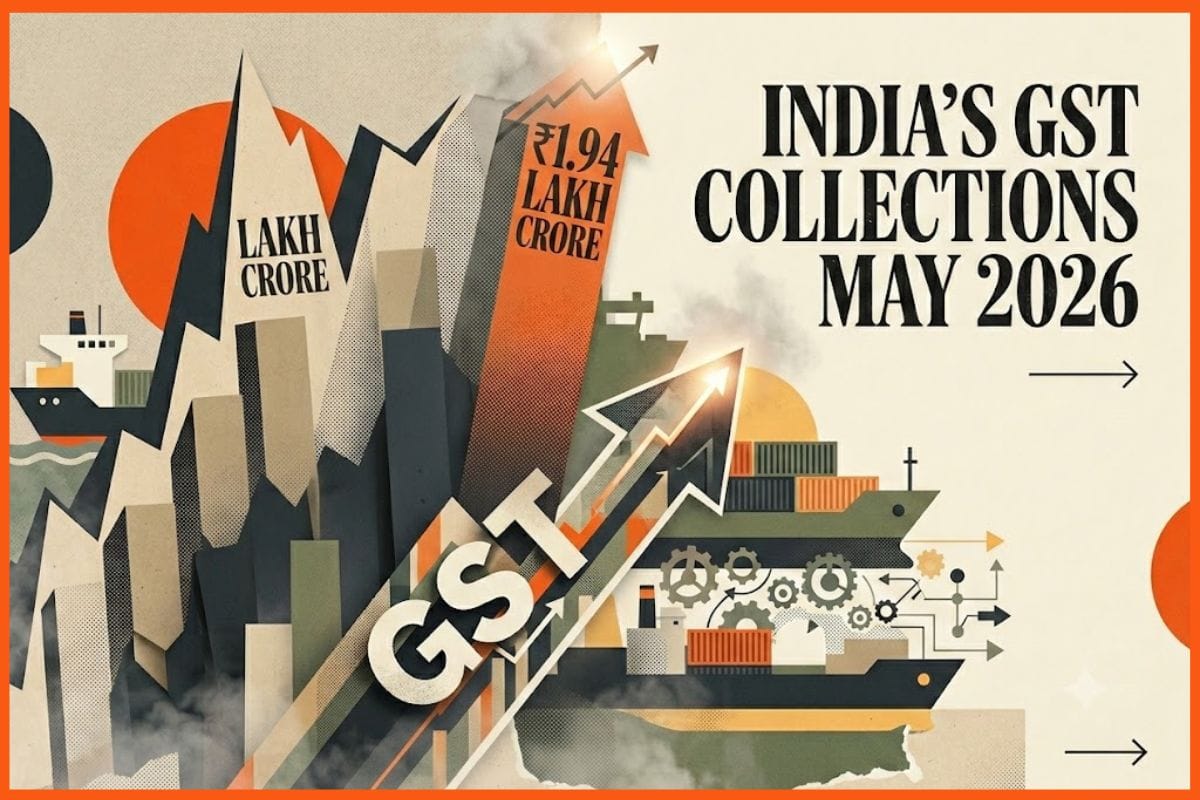
India's GST revenues for May 2026 tell a more positive story than the headline figures suggest. Once a one-time distortion from the previous year is removed, the country's tax engine is running stronger than ever. India collectedRs. 1,94,184 crorein gross GST revenue in May 2026, up 3.2% from Rs. 1,88,172 crore in May 2025. Net GST revenue, which is calculated after refunds, stood at Rs. 1,66,904 crore, a growth of 3.3% year-on-year. On the surface, these numbers look modest. But there is an important context that changes the reading significantly. In May 2025, a major telecom operator made a one-time payment of approximatelyRs. 10,000 croretowards spectrum allocation. This inflated last year's base. When you strip that out, the adjusted gross GST growth for May 2026 is a healthy9%, with domestic GST growing 5% and adjusted net revenue growing10.1%. That is the real benchmark for this month. A closer look at the data shows two very different stories within the same report. Domestic collections appear to have dipped, but this is almost entirely due to the telecom one-off in the base year. Import-related GST, on the other hand, jumped nearly a fifth, which points to stronger trade activity and rising volumes of goods entering the country. The import surge is not a fluke. In the April to May period of 2025-26, cumulative net customs revenue grew29.8%compared to the same period last year. This reflects growing imports across goods categories, including electronics, capital goods, and raw materials, which are all indicators of a busy manufacturing and consumer economy. The two-month cumulative numbers (April to May 2026) give a more reliable view of the trajectory. Refund growth of 10.9% year-to-date signals that the government is processing exporter refunds faster, which supports businesses, especially smaller exporters who rely on working capital. Faster refunds are also a sign of administrative maturity in the GST system. The state-wise data holds some of the most interesting signals. Several large economic states posted healthy gains in post-settlement SGST (the share of GST that actually reaches state treasuries after IGST settlement). Maharashtra remains the single largest contributor to GST in absolute terms. Karnataka and Haryana are growing fast, driven by their strong technology, manufacturing, and logistics ecosystems. Delhi's sharp drop in state-level collections deserves attention. Its gross domestic revenue (excluding imports) also fell 17% year-on-year per the state-wise table. This is partly linked to the telecom payment, which was booked in Delhi last year, but is also worth watching in the coming months. Jharkhand and Chhattisgarh, both resource-heavy states, have seen significant declines in SGST settlement, possibly reflecting softer commodity and industrial activity in the resource sector. One of the most forward-looking indicators in the report is the growth in GST-registered businesses. The number of GSTINs (tax registrations) r