
DoorDash's integration of Deliveroo, following the roughly two-billion-dollar acquisition announced in 2024 and completed in 2025, alongside its continued push into grocery, retail and convenience delivery through DashMart and expanded retail partnerships, marks a decisive shift in how founder and chief executive Tony Xu frames the company's identity: not as a restaurant-food delivery app that happens to deliver other things occasionally, but as a general local-logistics network for which restaurant delivery was simply the easiest category to prove the model on first. The Deliveroo deal gave DoorDash immediate scale across the UK, several European markets, Singapore, Hong Kong and Australia, markets where building organic density from scratch would have taken years and faced entrenched local competitors. DoorDash's core logistics advantage, a large, flexible network of independent delivery workers ('Dashers') combined with algorithmic dispatch and route optimisation refined over more than a decade of order data, translates in principle to any category involving last-mile delivery of physical goods, which is precisely the thesis behind its expansion into grocery delivery through partnerships with chains including Albertsons and its own DashMart convenience-format dark stores, as well as retail categories spanning pet supplies, electronics and home goods. The company's calculation is that restaurant delivery, while still its largest revenue category, has more limited growth headroom than the vastly larger addressable market of general local commerce. The competitive landscape varies significantly by category and geography. In US restaurant delivery, DoorDash has maintained the largest market share against Uber Eats and a much-diminished Grubhub; in grocery delivery specifically, it competes with Instacart's retailer-partnership model and increasingly with Amazon and Walmart's own delivery infrastructure; internationally, the Deliveroo acquisition puts DoorDash in direct competition with Just Eat Takeaway and, in parts of Southeast Asia, with the Grab-Gojek combined entity that dominates delivery across much of the region. The deeper financial logic rests on DoorDash's argument that delivery logistics is a network business with genuine economies of density: the more delivery volume across more categories flows through a given geographic market, the more efficiently Dashers can be routed across multiple simultaneous orders, improving unit economics for every category riding on the same network rather than requiring each vertical to build separate delivery infrastructure. Whether that density advantage holds up as cleanly for bulky grocery and retail orders as it does for restaurant meals remains one of the open questions in the company's non-restaurant expansion. What to watch: how quickly Deliveroo's European and Asian markets are integrated onto DoorDash's core technology and dispatch systems, whether grocery and retail delivery categories reach restaurant-level order frequency and margin, and how the combined company's international revenue mix shifts DoorDash's overall growth profile relative to its historically US-dominated business.
Related Stories
 Lam Research to invest Rs 10,000 Cr in India, set up first silicon component man
 Kissht parent OnEMI board approves Rs 832 crore preferential issue
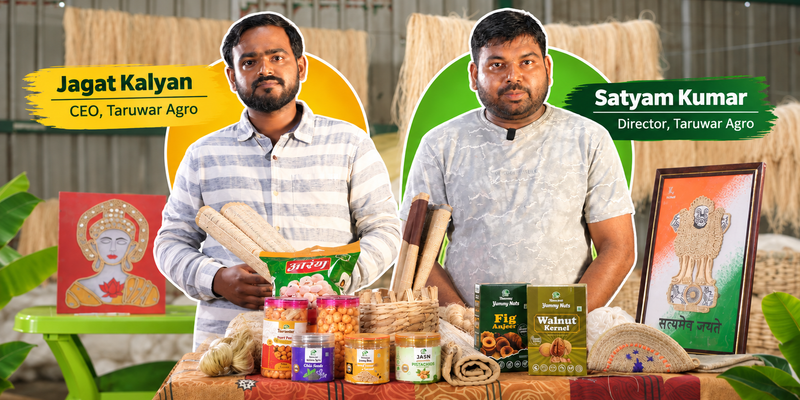 Taruwar Agro: Three Bihar Friends Built a Rs 2.5 Crore Business from Banana Wast
 Adidas Confirms Job Cuts at India Tech Hub, Nearly Half of Employees Affected