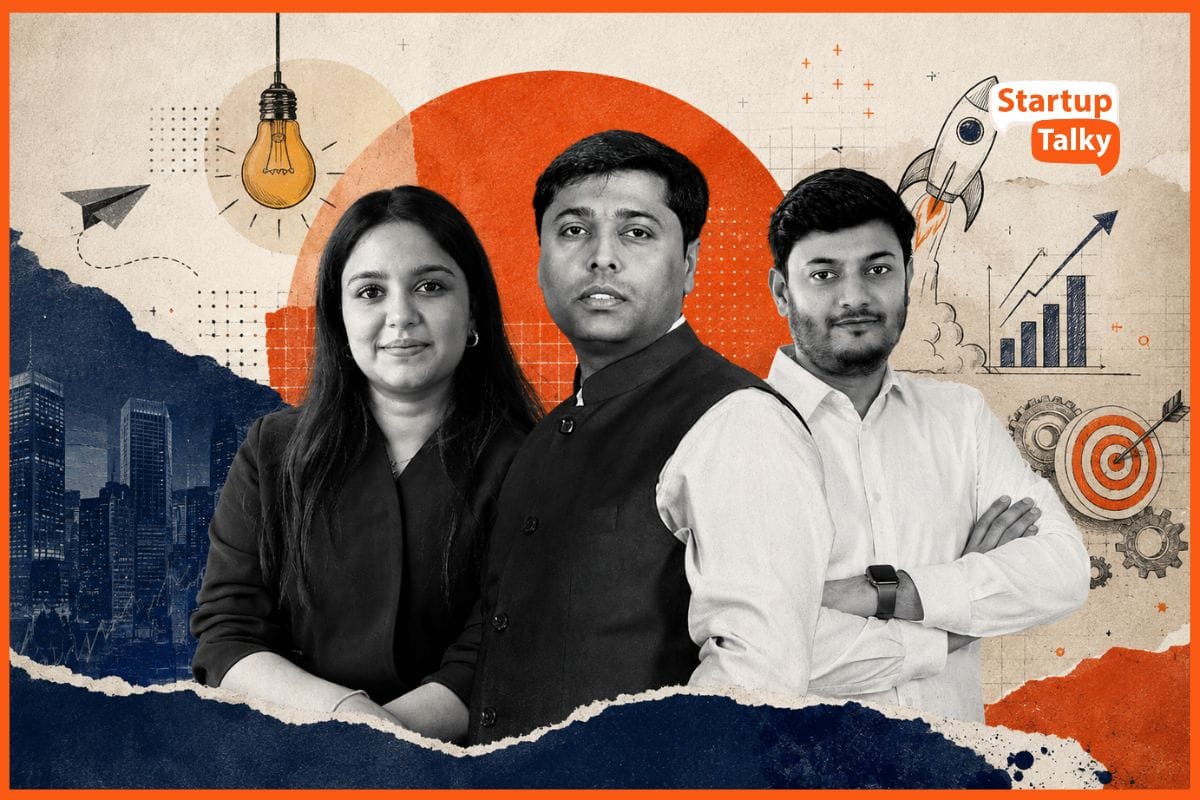
From earning customer trust to managing financial runway and knowing when to adapt, founders share lessons from their journeys and advice for those starting a business in 2026. Starting a business often begins with an idea. Building one that survives requires much more. India now has more than 2.47 lakh DPIIT-recognised startups, compared with 502 in 2016, according to government data as of 12 August 2026. The number shows how much entrepreneurship has grown in India. It says less about what happens after a founder takes the first step. A good product still needs customers. A new idea may need years to earn trust. Revenue may take longer than expected. Founders also have to decide when to stay the course and when to change it. On World Entrepreneurs’ Day, StartupTalky spoke to entrepreneurs across financial services, consumer brands, legal finance, energy and hospitality about what they wish they had known before starting out and what they would tell someone starting a business in 2026. Their businesses are different. Many of their lessons are not. Founders can be convinced that they have solved an important problem. Getting customers to see it the same way can be harder. ForVenkatesh Krishnamoorti, Co-Founder and CEO of Saafe, an account aggregator, this was one of the lessons that came with experience. His answer points to a gap founders can underestimate. Building a useful product and getting someone to prioritise it are separate challenges. Prabhu Gandhikumar, Founder and CEO of TABP Snacks and Beverages, learnt a similar lesson from the consumer market. For him, the product is only one part of the business. In FMCG, he says, that means understanding consumers, maintaining quality and building distribution. His advice for new entrepreneurs is equally clear:“focus on solving a real problem rather than simply building a business around a trend.” Finding a gap does not mean customers will immediately understand what is being offered. Vibhor Rastogi, Founder of Oteria, found this while building a brand around circadian rhythm skincare. Introducing a less familiar concept meant the company also had to explain it. That distinction matters for founders bringing a new category or concept to market. Marketing can create visibility. But if customers do not understand the proposition, visibility alone may not lead to adoption. Rastogi’s advice for 2026 is to“understand the need of the consumer and create a product that will fill the gap in the market.” Sandeep Ahuja, Managing Director of Atmosphere Living and One Atmosphere, also puts the customer at the centre of long-term decisions. Kresha Gupta, Director and Fund Manager at Steptrade Capital, describes an entrepreneur as the“Chief Everything Officer”. But knowing every part of a business does not automatically convince others to trust it. For Gupta, trust is built through judgement, consistency and showing up over time. Her experience has also shaped how she thinks about the time it takes to generate
Related Stories
 From idea to enterprise: Designing startup programmes that deliver long-term imp
 Mirae Asset Venture Investments, others pay Rs 12.75 lakh to settle Sebi proceed
 CCPA Penalises Rapido INR 10 Lakh for Dark Patterns, Uber and Ola Under Scrutiny
 JanAI Technology launches with a plan to take AI to 100 million Bharat household