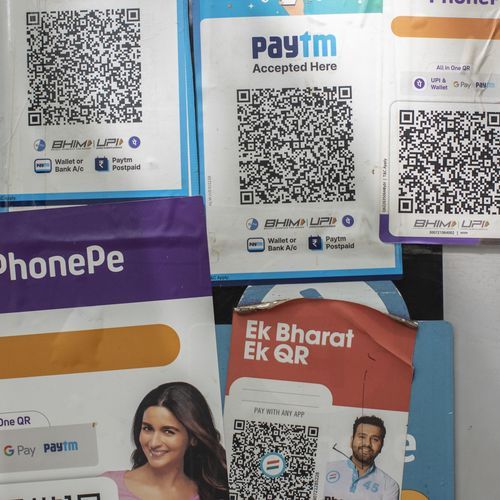
As India's Unified Payments Interface continues setting new monthly transaction records through 2026, a disproportionate share of that volume is now routed, at some point in the checkout flow, through infrastructure built by Juspay, a Bengaluru orchestration company that most consumers have never heard of. The company's payment-orchestration and checkout software sits behind the scenes at Amazon, Flipkart, Swiggy and a long list of large Indian digital merchants, and 2026 has brought renewed speculation that the profitable, enterprise-only business could be preparing the groundwork for an eventual IPO. Founded in 2012 by Vimal Kumar, Juspay began as a mobile analytics company before pivoting toward payment infrastructure, building JuspaySafe, a checkout layer that reduces transaction failures and latency by intelligently routing payments across banks, UPI switches and card networks. More recently the company open-sourced Hyperswitch, a payment-orchestration engine that has attracted a global developer community and given Juspay a credibility play beyond the Indian market, echoing how infrastructure companies elsewhere have used open-source distribution to seed enterprise sales. Investors including Wellington Management, Steadview Capital, Vy Capital and Susquehanna have backed the company through several rounds without pushing it toward the consumer-facing product lines that dominate most Indian fintech headlines. Juspay's competitive set looks different from the typical payment-aggregator comparison. Razorpay, Cashfree and PayU all offer some orchestration capability but are primarily merchant-facing payment gateways monetising through per-transaction fees on the full payment stack; Juspay instead positions itself as infrastructure that sits underneath or alongside those gateways, optimising routing and reducing failure rates for the largest enterprise merchants who often run multiple payment partners simultaneously. That B2B-infrastructure positioning has let Juspay avoid much of the price competition that has compressed margins for consumer-facing aggregators. The monetisation model, however, remains a genuinely small per-transaction fee applied across enormous volume, which is precisely the structure that requires massive scale before it produces meaningful absolute profit. Juspay has claimed profitability in recent years, a rarity among Indian fintech infrastructure companies of its size, but the business faces a structural dependency on NPCI's continued growth of UPI volumes and on the evolution of newer rails such as credit-on-UPI and UPI Lite, both of which will require fresh orchestration logic to route correctly. What to watch: whether Juspay files confidentially for an IPO in 2026 or 2027, how much of its revenue growth is now coming from Hyperswitch's international enterprise customers rather than domestic UPI volume, and whether NPCI's rollout of credit-on-UPI creates a meaningful new revenue line for orchestration providers.