
Bijak has completed a multi-year transformation by 2026, moving decisively away from the ambitious B2B agri-commodity marketplace it originally set out to build and toward a narrower, more defensible business layering payments and short-term financing on top of India's existing mandi trading system, a retreat that followed the company's 2023 restructuring, which cut headcount significantly and scaled back its original marketplace ambitions. Founded in 2019 by Nukul Upadhye, Jitender Bedwal and Mahesh Jakhotia, Bijak initially built a WhatsApp and app-based platform intended to connect traders and buyers of grains, pulses, spices and other agricultural commodities directly across India's fragmented network of Agricultural Produce Market Committee mandis, aiming to disintermediate the commission agents, known as arhatiyas, who have historically brokered nearly all such trade. Investors including Sequoia India, now Peak XV Partners, RTP Global and Omidyar Network India backed the marketplace vision on the scale of the opportunity: agricultural commodity trade in India runs into tens of billions of dollars annually, almost entirely offline and relationship-driven. The pivot puts Bijak in a different competitive lane from Ninjacart and DeHaat, both of which focus on farm-to-business supply chains connecting farmers directly to retailers and food-service buyers rather than on trader-to-trader matching within the mandi system itself. Bijak's original target, the arhatiya-mediated wholesale trading relationship, has proven remarkably resistant to digital disintermediation because it is built on decades of accumulated trust and informal credit extended between known counterparties, a dynamic that a marketplace-matching app struggled to replicate regardless of how much liquidity it could theoretically unlock. The payments and financing pivot, marketed under products such as Bijak Pay, is a narrower but structurally more defensible wedge: rather than trying to replace the trading relationship itself, Bijak now aims to sit inside it, offering invoice-discounting-style short-term credit and digital payment settlement to traders who continue transacting largely as they always have. The pattern echoes what happened at other ambitious Indian B2B marketplace startups, including Udaan and OfBusiness, both of which discovered over time that embedded financial services, rather than pure commerce matching, was where the more durable margin and defensibility actually sat. What to watch: whether Bijak's financing product achieves meaningful adoption among mandi traders who have historically relied on informal credit from arhatiyas, how the company's unit economics compare once it is primarily a lender-adjacent fintech rather than a marketplace, and whether Bijak raises fresh capital explicitly positioned around the narrower payments and financing thesis.
Related Stories
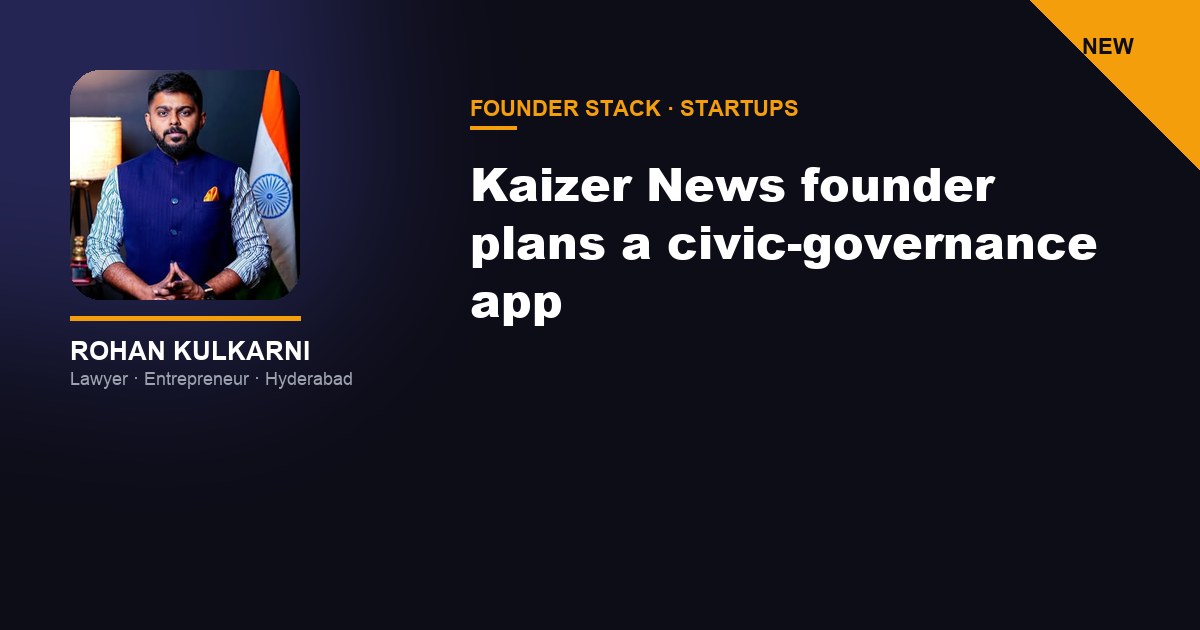 Kaizer News founder Rohan Kulkarni plans a civic-governance app for Hyderabad
 Ninjacart's new funding round is a bet that fresh-produce logistics can finally
 DeHaat's path to profitability runs through the businesses it is shutting down
 Midjourney's move into video and 3D is a rare bootstrapped bet against the fundi