
Suno spent its first two years as a startup defined almost entirely by conflict with the record industry, and the company's transition toward formal licensing deals in 2025 and 2026 marks one of the clearer signs that generative AI companies trained on copyrighted material can eventually reach commercial terms with rights holders rather than fighting them indefinitely in court. Founded by Mikey Shulman, a former Kensho executive with a physics PhD, alongside Georg Kucsko, Martin Camacho, and Keenan Freyberg, Suno built a text-to-music generation product that lets users produce full songs, vocals and instrumentation included, from a short text prompt, a capability that immediately drew lawsuits from Universal Music Group, Warner Music Group, and Sony Music Entertainment alleging mass copyright infringement in how Suno's models were trained. The legal exposure did not stop investors from backing the company, a reflection of how normalized litigation risk has become in the generative AI funding environment. Suno raised a $125 million Series C in 2025 at a $2.45 billion valuation, with the round's investors betting that a settlement or licensing framework, rather than a business-ending injunction, was the more likely outcome given the precedent set by other AI copyright disputes and the labels' own commercial interest in participating in a fast-growing new distribution channel rather than simply litigating it out of existence. That bet paid off when Warner Music Group announced a licensing agreement with Suno in 2025 that gave the label both compensation for historical use of its catalog in training data and a framework for artists to opt in to having their voice or style licensed for AI-generated content going forward, a structure that mirrors the kind of collecting-society arrangements the music industry built decades earlier for radio and streaming royalties. Universal and Sony have moved more cautiously, but industry expectation by early 2026 was that similar deals with the remaining majors were a matter of when, not if, given Warner's template and the commercial pressure of missing out on a fast-growing platform. The unresolved tension is artist consent versus label consent: licensing deals negotiated between Suno and the major labels compensate the labels and, depending on contract terms, a share may flow to artists, but individual musicians have limited ability to opt out if their label licenses their catalog on their behalf, a dynamic that has drawn criticism from artist advocacy groups even as the label-level deals proceed. That tension is likely to shape how AI music licensing evolves globally, particularly in markets with stronger individual moral-rights protections than the US. What to watch: whether Universal and Sony sign licensing deals with Suno on Warner's template through 2026, whether artist-level opt-out mechanisms become a standard feature of these deals under pressure from musician advocacy groups, and whether Suno's revenue growth justifies its valuation once licensing royalty payments become a recurring cost line rather than a one-time settlement.
Related Stories
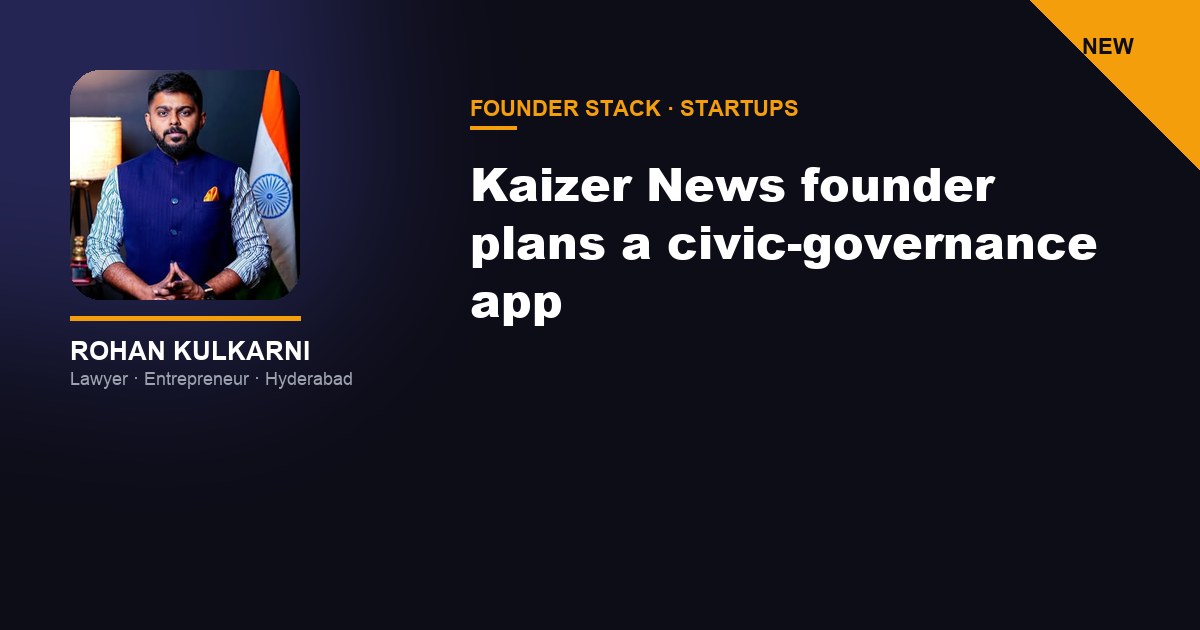 Kaizer News founder Rohan Kulkarni plans a civic-governance app for Hyderabad
 Ninjacart's new funding round is a bet that fresh-produce logistics can finally
 DeHaat's path to profitability runs through the businesses it is shutting down
 Bijak's retreat from marketplace matching into agri-payments is a survival pivot